Not everything is well-thought-out. The 7 Principles of Universal Design guide designers — of places, of objects, and even of teaching — to create environments, products and learning opportunities that the greatest number of people will be able to access successfully with the least effort. Universally designed birding locations allow equitable access regardless of disability, and will include interpretive signs with tactile and audio components — not just visual information. (Learn more about what makes up a truly accessible birding location here.) Well-designed products will be will be intuitive and easy to use, will have a margin of error built in, and will require low physical effort to carry and use.
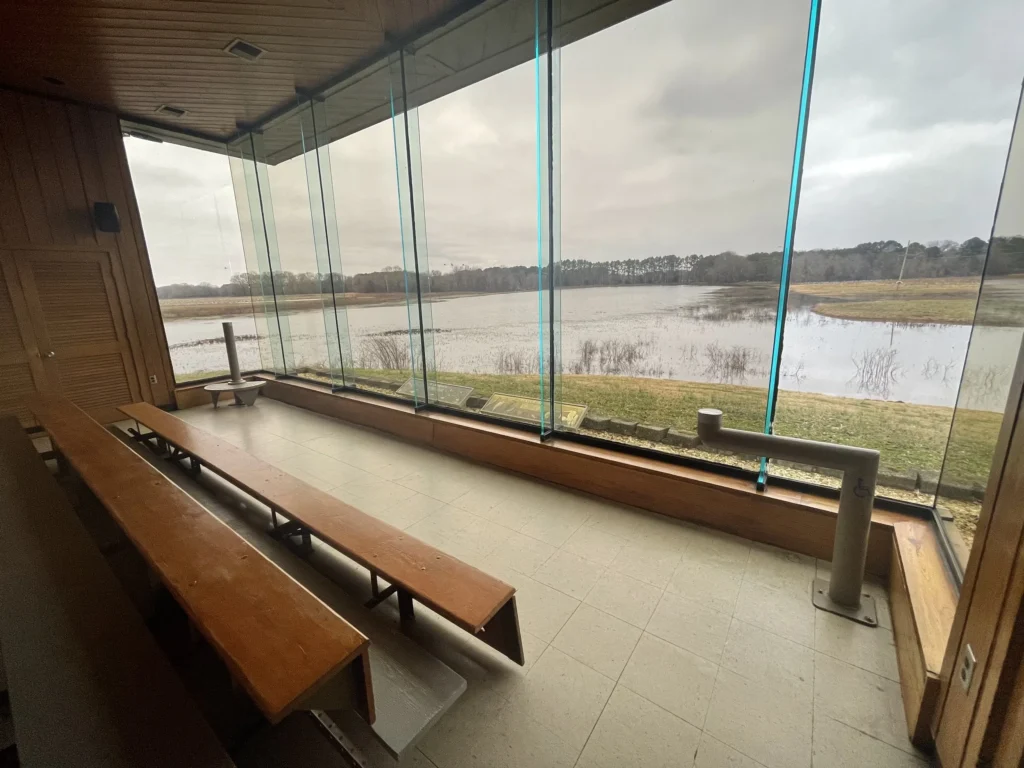
The incredibly accessible observation building at Wheeler National Wildlife Refuge, Alabama, demonstrates the principles of universal design, allowing everybody to enjoy the Sandhill Cranes overwintering there. Photo: Freya McGregor.
Universal design benefits people with disabilities and other health concerns, and it benefits everybody else, too. That’s why we advocate for tactile components on interpretive signs — it’s not only folks who are blind or have low vision who might benefit, but young kids, people with print disabilities like dyslexia, folks who don’t read English and people who just enjoy touching things to help them learn! And accessible port-a-potties let everybody in, but the regular-sized ones only allow some people to use the bathroom. When you apply universal design principles, every body wins!
What are your values? What frames of reference do you use to help make decisions in your life? Do any of them align with ours? We hope so, and we’re glad you’re here! We hope you’ll continue exploring our website and helping us ensure that birding and the outdoors truly are for everybody and every body!