Originally discussed by Kimberlé Crenshaw in 1991 in relation to the compounding issues that people who are both Black and female experience, this concept states that we are not one-dimensional humans. We each hold multiple identities, but when they include multiple historically marginalized identities (someone who is Black, disabled and gay, for example) these combine to have an even more significant impact on that person in a negative way. The intersecting systems of oppression — the multiple layers of social injustice — mean, for example, that someone who is Black, disabled and gay may have to deal with racial micro aggressions, inadequate physical accessibility and homophobia when trying to go birding with a group.
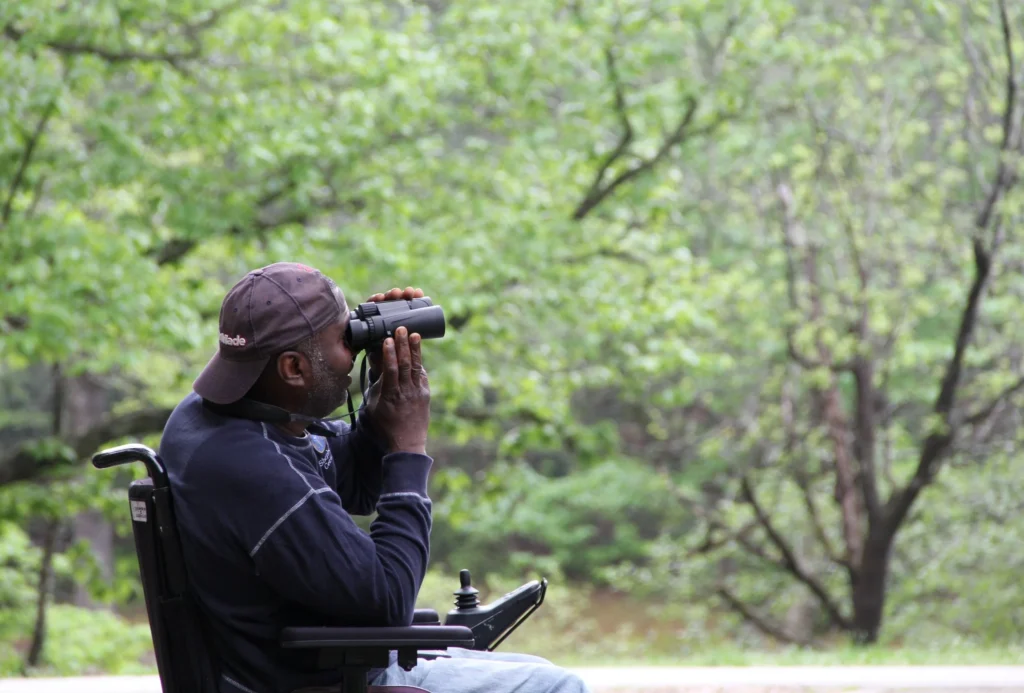
Black disabled birders exist! If we want to be welcoming and inclusive, we must address racism and safety in birding, as well as disability-specific issues. Photo: Melanie Furr.
Intersectionality means that if, at Birdability, we were only working to serve white, straight, cisgender disabled birders, we wouldn’t be truly inclusive, and we wouldn’t be doing our job. Intersectionality means that we must address racism, homophobia, transphobia, sexism, classism, xenophobia and all the other awful discriminatory mindsets in the cultural and social environments that can negatively impact someone’s ability to go birding. (There’s more about this in a Birdability Blog post titled Why we have a safety question in the new Birdability Site Review.) While we don’t work explicitly to make birding more accessible for nondisabled People of Color, for example, we must be working to make birding more accessible for disabled People of Color… which hopefully creates some positive follow-on effects for People of Color without access challenges.